
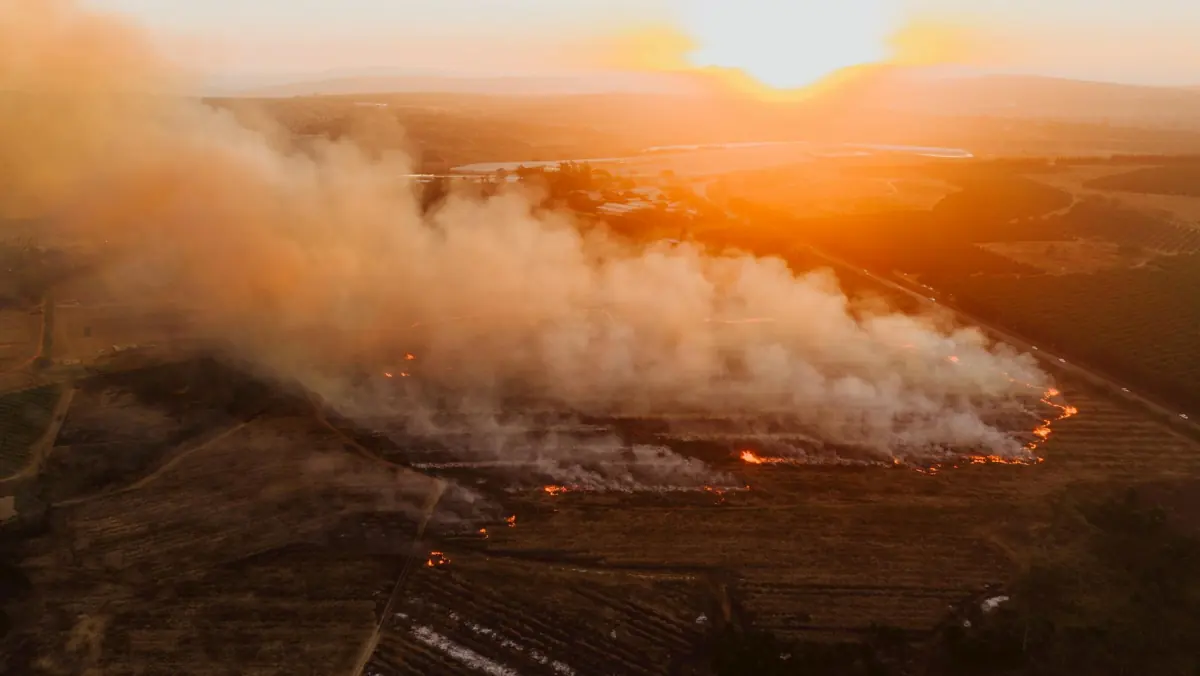
Extreme heat is no longer a seasonal nuisance for South African agriculture. It is a recurring operating risk that affects crop yields, livestock productivity, water use, labour safety, transport timing, and ultimately the price and availability of food. For agribusinesses, the practical question is no longer whether hot spells will happen, but how quickly operations can adapt when they do. Heatwaves do not hit every farm in the same way, but the pressure points are familiar: soil moisture disappears faster, animals eat less and produce less, workers tire sooner, and irrigation systems are asked to do more with less water.
The broader climate backdrop matters here. South Africa has already been experiencing hotter conditions, with warming trends expected to continue over time. In a country where most agricultural land is rain-fed rather than irrigated, that creates a structural vulnerability. When heat arrives on top of dry conditions, the damage compounds. It is not only the field-level loss that counts. A heatwave can also disrupt planting windows, increase the cost of feed and water, reduce processing efficiency, and force managers to choose between short-term output and worker well-being. That is why heat exposure should be treated as a business continuity issue, not just a weather report.
What heat does to crops
Crop production is often the first place the strain becomes visible. High temperatures speed up evaporation, reduce soil moisture, and can push plants beyond the range where they can efficiently photosynthesise and fill grain or fruit. Maize is especially important because it sits at the centre of food security and livestock feed. When hot, dry conditions persist through the growing season, yields can drop sharply. Forecasts during strong El Niño periods have pointed to maize harvests coming in well below average, which matters not only to farmers but also to millers, feed manufacturers, and consumers.
The impact is not limited to maize. Fruit and vegetable farms face quality losses when heat stress affects flowering, fruit set, or size consistency. In some cases, produce can still be harvested, but grading outcomes worsen and shelf life shortens. That translates into more waste, more rejected loads, and weaker margins. For exporters, the problem can be even more costly because consistency and appearance often determine whether a shipment clears the market at a premium or is downgraded. Heat can also make irrigation scheduling more complicated, since water applied during a hot spell may be lost more quickly through evaporation than under milder conditions.
There is a common misconception that irrigation alone solves heat risk. It helps, but it is not a cure-all. Water availability is already under pressure in many districts, and energy costs can rise when pumps must run longer or more often. On smaller farms, irrigation infrastructure may simply not be adequate for extended extreme heat. That is why crop resilience has to be built earlier in the season through better varietal selection, soil management, mulching, shade where appropriate, and careful planning around sowing dates. Heat preparedness begins before the temperature spikes, not once the damage is visible.
Livestock under pressure
Livestock producers face a different but equally serious set of risks. Animals under heat stress eat less, drink more, and divert energy away from growth or milk production toward basic thermoregulation. Dairy cattle are particularly sensitive. When cows are exposed to prolonged heat, milk output can fall materially, and reproductive performance can also suffer. That means the financial damage is not just immediate. It can persist into the next production cycle through lower conception rates, weaker body condition, and higher vet intervention costs.
Meat producers face similar problems. Heat stress can reduce weight gain, affect feed conversion, and raise the risk of transport-related losses if animals are moved during the hottest part of the day. Poultry systems are also vulnerable because birds have limited cooling mechanisms and can be quickly affected by ventilation failures or overcrowded sheds. Even if direct mortality does not occur, output can fall enough to alter cash flow and complicate supply commitments to processors and retailers.
Water management is central to livestock resilience. When heat rises, water demand rises too, and any interruption in supply becomes more dangerous. Producers need reliable trough access, shade, airflow, and a plan for rapid response when temperatures approach unsafe levels. The key operational point is that heat stress rarely shows up as one dramatic event. It usually appears as a pattern of lower performance, higher feed demand, and more labour time spent on basic mitigation. That makes it easy to miss until the numbers have already moved in the wrong direction.
Worker safety is operational risk
Outdoor workers are often the most exposed part of the agricultural system. Heat does not only reduce productivity; it can create medical risk. Dehydration, dizziness, cramps, heat exhaustion, and heatstroke are all serious concerns when people are asked to carry out heavy physical labour under intense sun. Official guidance from the Department of Employment and Labour has stressed the need for heat precautions, especially when working conditions become unsafe for strenuous outdoor tasks. A practical threshold commonly referenced for heavy labour is a Wet Bulb Globe Temperature below 30°C, although actual risk depends on humidity, direct sun, workload, and acclimatisation.
The operational mistake many businesses make is treating safety as a personal responsibility issue rather than a management issue. Workers cannot always self-regulate their exposure if production targets, shift patterns, or transport schedules are rigid. Managers need to change the workday, not just issue advice. That can mean earlier starts, more rest breaks, shorter shifts during peak heat, better access to drinking water, and rotating tasks so no one is exposed for too long. Training should also be practical and repeated: workers and supervisors need to recognise early warning signs and know exactly what to do if someone becomes ill.
For farms and agribusinesses that rely on seasonal labour, the stakes are higher. New or temporary workers may be less familiar with local conditions and may hesitate to report symptoms. They may also be under pressure to keep up. A heat policy only works if it is clear, visible, and enforced. It should cover hydration, break frequency, shade access, emergency escalation, and transport home if conditions become unsafe. If a business would suspend work for machinery failure, it should suspend or reshape work when people are exposed to dangerous temperatures.
Water scarcity makes everything worse
Heat and water scarcity reinforce one another. When temperatures climb, evaporation accelerates and crops need more irrigation. At the same time, rivers, dams, and groundwater systems are under greater stress. This is where South African agriculture becomes especially exposed, because a large share of farmland still depends on rainfall rather than full irrigation. If the rain does not arrive on time, or if it arrives in a pattern that is too erratic to support planting, the farm absorbs the shock immediately.
This is also why the issue cannot be solved farm by farm alone. A heatwave does not sit in one field. It affects water boards, municipal supply systems, transport networks, and input availability. When a region faces higher demand for pumping, cooling, and irrigation at the same time, competition for water can intensify. Businesses that assume they will simply buy their way out of scarcity often discover that water, not capital, is the real constraint. The better approach is to reduce dependence where possible, improve efficiency, and build redundancy into the supply plan.
Practical measures include soil moisture monitoring, leak detection, more efficient irrigation systems, and storage planning for critical periods. Farms that can capture and hold water better are usually in a stronger position than those relying on reactive top-ups. Even modest improvements in scheduling can reduce waste. On larger operations, it may be worth linking irrigation decisions to weather forecasts, plant stress indicators, and water reserve levels rather than to calendar habits. Heat preparedness should be managed like inventory control: if the system is tight, there is less room for delay.
What it means for prices and supply chains
When heat cuts production, the effects do not stop at the farm gate. Lower crop yields can tighten supply, increase input costs for feed manufacturers, and push up wholesale prices. Livestock losses or reduced output can do the same for dairy, meat, and eggs. Consumers often feel the consequence later, but the chain is direct. A bad heat season raises volatility, and volatility is expensive for everyone who has to plan around it.
For agribusiness operators, this has a few important implications. Procurement teams may need to hedge earlier, build more flexibility into contracts, or diversify sourcing across regions. Processors may have to adjust throughput expectations during high-risk months. Logistics planners should also account for higher spoilage risk if produce sits longer in transit or loading areas. A heatwave can damage value even when the product is technically harvested on time. The loss may appear as downgraded quality, higher shrinkage, or missed delivery windows rather than as total crop failure.
There is also a competitive dimension. Businesses that can keep operating safely and consistently during extreme heat are more reliable suppliers. In tight markets, that reliability matters. It can protect relationships with retailers, processors, and export buyers. In other words, resilience is not just defensive. It can become a commercial advantage if it is built into planning, labour management, and infrastructure before the next hot spell arrives.
Simple steps agribusinesses can take now
There is no single fix for extreme heat, but there are several practical actions that reduce risk quickly. The goal is not perfection. It is to lower exposure, slow losses, and keep people safe enough to work efficiently when conditions turn harsh.
- Review heat thresholds for field work and define when heavy labour must stop or shift.
- Move the hardest physical tasks to cooler parts of the day wherever possible.
- Increase access to clean drinking water, shade, and rest breaks for all outdoor staff.
- Check livestock watering systems before temperatures rise, not during the heat peak.
- Monitor soil moisture and irrigation performance daily during heat-prone periods.
- Prioritise crops and blocks that are most vulnerable to heat and water stress.
- Train supervisors to recognise early heat illness and escalate immediately.
- Inspect ventilation, cooling, and backup power for sheds, packhouses, and storage areas.
- Review insurance, contract terms, and delivery commitments against heat-related disruption.
- Document what worked after each heat event and update the farm response plan.
These steps are deliberately basic because the basics are often where businesses fail first. A heat policy is only useful if workers understand it, supervisors enforce it, and managers have already decided what actions trigger a change in operations. The most expensive response is usually the delayed one. By the time a crew is dizzy, a herd is underperforming, or a crop has already wilted, the damage is harder and more costly to reverse.
Why this will keep happening
Extreme heat should be understood as part of South Africa’s longer-term operating environment, not as an isolated anomaly. Climate trends point toward hotter average conditions and more frequent heat stress. That does not mean every season will be worse than the last, but it does mean the baseline risk is shifting. For agriculture, that shift matters because production systems are slow to change. Orchards, irrigation infrastructure, breeding decisions, and workforce arrangements all lock in over time.
This is why adaptation needs to be treated as a continuous process. Farms and agribusinesses that wait for a crisis before redesigning operations will always be reacting late. The better approach is to assume heat will return, build procedures around that assumption, and improve them after each season. Some businesses will need changes in crop mix. Others will need storage, water efficiency, or labour timing changes. Many will need all of the above in different proportions.
The practical takeaway is straightforward: heatwaves are not only a weather story. They are a productivity story, a safety story, a water story, and a price story. For South African agribusinesses, the question is how to absorb the shock without turning a hot week into a season-long loss. That means measuring risk earlier, protecting workers more carefully, using water more efficiently, and planning for production to slow when temperatures rise. The businesses that do this well will not eliminate heat risk. They will simply be better prepared for the reality that heat is now part of the job.